
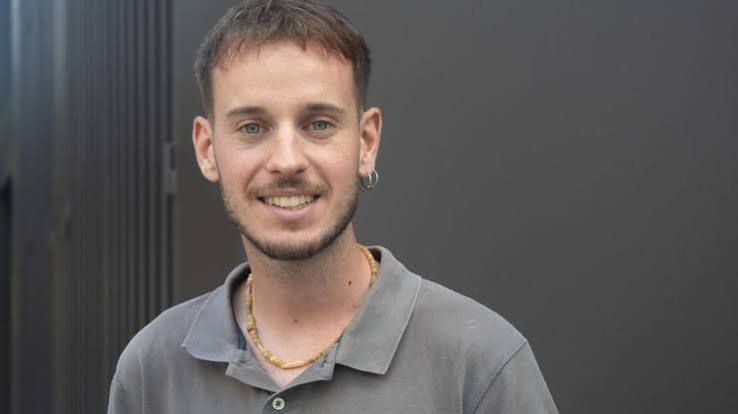
Get to know the voices behind RECETAS…
Marc Ollivela Cirici, Catalan Social Prescribing Programme coordinator at the Agència de Salut Pública de Catalunya, shares insights on how Catalonia has scaled up Social Prescribing, and what it takes to build a legitimate, sustainable model of community-based health.
The Catalonia region stands as an advanced example of Social Prescribing in Europe. Implementing this approach at such a scale must come with its share of challenges. Could you outline the main difficulties encountered and share recommendations for local and regional authorities in other countries?
Catalonia has made important progress in recent years in scaling up a structured model of Social Prescribing within primary and community care, building on a community health approach and progressively extending implementation across the territory.
From our experience, and in line with the evidence described in the literature, the main challenges are not only technical but also structural and contextual. These include fragmentation between sectors, limited community capacity, workforce pressures, and the need to strengthen coordination mechanisms between health services and community resources.
At the same time, our own evaluation in Catalonia highlights additional implementation barriers such as lack of time, variability in coordination with community actors, and limited use of digital tools and follow-up systems.
A recent report on the state of Social Prescribing in Catalonia, providing a detailed overview of these challenges and the current level of implementation across the territory, along with key recommendations for local and regional authorities, is available [here].
The biomedical field holds the greatest institutional legitimacy within care pathways. What scientific validation models have been adopted to support Social Prescribing? And more broadly, how can the legitimacy of this approach be established?
One relevant reference is the recent work developed within RECETAS led by Jill Litt et al. (2024), which contributes to framing Social Prescribing within a broader evidence-informed and theory-driven perspective, emphasising relational processes, community engagement and context-sensitive implementation.
More broadly, the legitimacy of Social Prescribing does not rely only on traditional biomedical evidence models, but also on implementation science, mixed-methods evaluation, and the consistent documentation of psychosocial and social outcomes.
In the Catalan model, legitimacy is also built through implementation. A key element is Phase 0/1 of the implementation process, which focuses on generating community alliances and legitimizing the programme locally. This includes prior community diagnosis, identification of existing structures, institutional endorsement, and shared prioritization of objectives across stakeholders.
This phase is essential because it ensures that Social Prescribing is not introduced as an external intervention, but rather embedded within existing community health processes, avoiding duplication and strengthening sustainability.
In addition, implementing Social Prescribing requires a change of perspective within the health system. This involves moving from an individualistic biomedical model to a holistic approach, a focus on pathogenesis to salutogenesis, a deficit-based logic to capacity and strengths, and a reactive model to a more proactive approach.
This conceptual shift is fundamental to understanding how Social Prescribing gains legitimacy as a public health practice rather than as a purely clinical intervention.
During your presentation at the RECETAS Annual Consortium in Marseille on 3 June, you noted that Social Prescribing is not intended to replace medical or psychotherapeutic responses to loneliness-related suffering. In that case, how does Social Prescribing complement more traditional care pathways?
Social Prescribing is not intended to replace medical or psychotherapeutic care, but rather to complement it. It is particularly relevant for situations where distress is linked to social determinants such as loneliness, isolation, or unmet social needs.
In our model, Social Prescribing is integrated as part of the therapeutic plan, allowing professionals to offer structured, non-pharmacological alternatives that address the social dimension of health.
This complementarity operates in several ways: it expands the range of responses available in primary care, supports emotional well-being and social connection, and helps reduce unnecessary medicalization in cases where biomedical interventions have limited impact. At the same time, it maintains clear boundaries: when clinical or psychological treatment is needed, Social Prescribing does not replace it, but can reinforce its effectiveness by addressing contextual factors affecting health outcomes.
What distinction do you draw between preventive health and health promotion/promotional health — and how does Social Prescribing fit within each of these frameworks?
Regarding the distinction between preventive health and health promotion, Social Prescribing in Catalonia is primarily framed within a health promotion and community health approach, although it also contributes to prevention.
From a preventive perspective, it can help reduce risk factors and avoid the progression of certain health conditions, particularly those related to mental health and social isolation.
However, its main contribution lies in health promotion: it strengthens individual and community capacities, enhances social participation, and fosters meaningful engagement with local resources. This aligns with a salutogenic perspective, focusing on what generates health rather than only on what prevents disease.
In this sense, Social Prescribing acts as a bridge between the healthcare system and the community, operationalizing a model where health is co-produced through social relationships, local assets, and everyday environments.
Commentaires récents