
MARSEILLE
France
The RECETAS project in Marseille
In Marseille, the RECETAS project targets people living in deprived urban districts, where social and economic inequality is particularly acute. Many residents face isolation, precarious housing, or limited access to green and blue spaces – all risk factors for loneliness and poor mental health.
The city’s rich natural assets provide a promising but underused laboratory for nature-based social prescribing (NBSP): Marseille offers hectares of green areas, a long Mediterranean coastline, parks, squares, gardens, and blue infrastructure.
À Marseille, le projet RECETAS cible les personnes vivant dans des quartiers urbains défavorisés, où les inégalités sociales et économiques sont particulièrement aiguës. De nombreux habitants sont confrontés à l’isolement, à un logement précaire ou à un accès limité aux espaces verts et bleus – autant de facteurs de risque favorisant la solitude et une mauvaise santé mentale.
Les richesses naturelles de la ville offrent un laboratoire prometteur mais sous-exploité pour la prescription sociale fondée sur la nature (NBSP) : Marseille dispose d’hectares d’espaces verts, d’un long littoral méditerranéen, de parcs, de places, de jardins et d’infrastructures bleues.
Building Healthier and Better Socially Connected Communities Through Nature
Policy Recommandations:
> Policy Brief for Marseille (EN)
> Policy Brief for Marseille (Short Version) (EN)
> Policy Brief for Marseille (FR)
> Policy Brief for Marseille (Short Version) (FR)
How were nature-based and social activities tested?
Based on the local mapping of actions and actors carried out by AViTeM, AP-HM adapted the objectives of RECETAS to Marseille’s socio-sanitary context in order to co-create a panel of NBSPs. In Marseille, the intervention targeted people who live in the deprived districts that are strongly marked by indicators of social disadvantage.
Volunteer involvement was encouraged by cocreating NBSPs based on the needs and priorities identified.
Qualitative evaluations were organized (via interviews and focus groups) throughout the intervention, and quantitative data were collected according to a specific schedule (post-intervention, at 6 month follow up, at the end of a maintenance phase and at 12 month follow up).
Evaluation indicators were selected with the target groups and professionals to assess the impact of the intervention on mental well-being, participation and sense of belonging, for example.
The intervention were designed: an action model was developed with the partners.
Participants will met each week (of a total of twelve) to engage in activities of their choosing, which were based on the sharing of moments outdoors in green and/or blue spaces. They were full actors and organizers of their project.
Immerse yourself in the world of RECETAS
Through the stories of the people who have been part of our groups in Marseille, the places where they live and the reinvention of urban nature as a space for connection, resilience and well-being.


Nature-Based Psychosocial Interventions: Bringing Together Initiatives
On 6 November 2025, the RECETAS project team in Marseille brought together professionals to highlight the role of nature-based psychosocial interventions.

Harnessing Nature to Address Urban Loneliness: Insights from Marseille
In France, the proportion of adults who report feeling lonely “often or almost every day” jumped from 19% in 2020 to 29% in 2022

Movie/debate night around the documentary « Long live germs » with journalist Marie-Monique Robin
More than ever, the links between biodiversity and health are at the forefront of current affairs, and the health benefits of contact with nature are widely recognized.
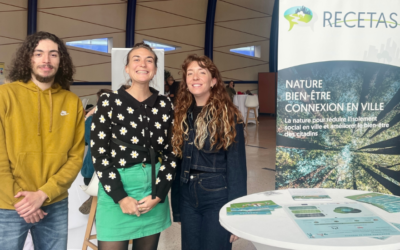
Departmental Congress on the Battle against Loneliness
On November 8, 2024, Marseille’s RECETAS teams attended the Departmental Congress on the Battle against Loneliness (Assises départementales de Lutte contre l’Isolement).

RECETAS featured in French newspaper Le Monde
This article revisits evidence that nature benefits one’s physical and mental health. Nature is a green lung that boosts our health!

RECETAS featured in French newspaper: L’Express
Broken lives and premature death: how did loneliness become a sanitary emergency?
Example of good practices
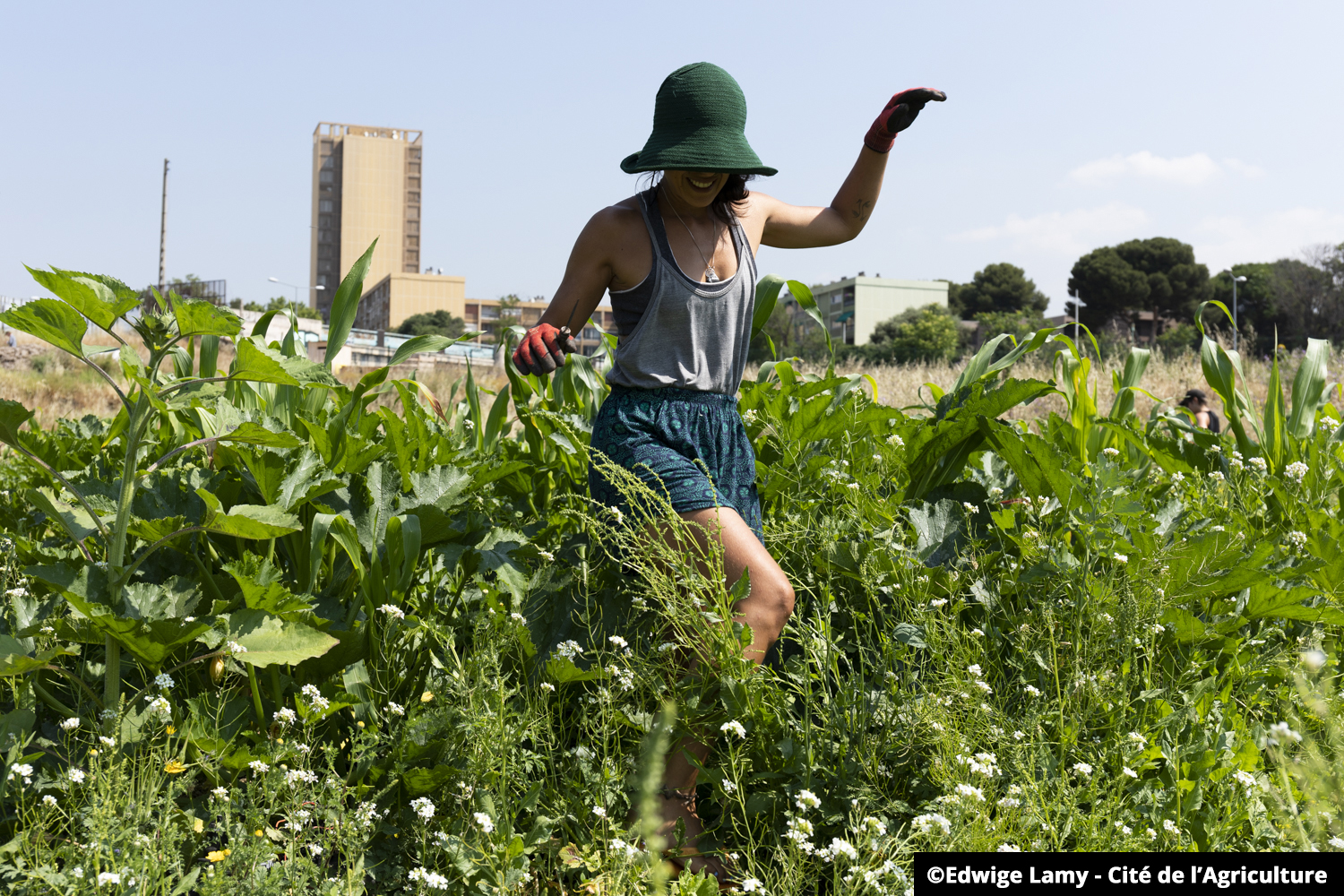
*Managed by the Cité de l’Agriculture, the Capri Farm aims to offer a preserved natural space for walking, playing, meeting people and social mixing. Visitors are made aware of the workings of agricultural production and of eating well.
More information.

The Health Sport House « Provence en Forme » aims to raise awareness and provide information on the practice of sports activities for health and well-being. It brings together several associations that offer, among other things, group outdoor activities (hiking, diving, etc.).
About Marseille
Marseille is located in south east France, on the Mediterranean coast. Founded in antiquity by Greek sailors and merchants from Phocaea, it is the second largest city in France. Marseille’s openness to the Mediterranean Sea has made it a cosmopolitan city from the outset, marked by numerous cultural and economic exchanges with Southern Europe, the Near East and North Africa. Despite the strong commerce sector with the 1st French port, the city still struggles with deep social inequalities and an economic divide between the south of the city and the northern districts.
A city where social and economic issues are well known:
17% of people in France struggle with mental health problems (1)
14% of people suffering isolation in France (2)
300 000 people living in deprived areas among (3)
Mental health disorders and isolation affect a significant part of the population…
26% of the population living in poverty (4)
14 063 people in an emergency homeless situation (5)
But the city has a great potential for Nature-Based Social Prescribing!
10 000 hectares of natural spaces (6)
57 km of coastline (7)
331 squares, parks and gardens (8)
sources
1) Source: INSEE
2) Source: projet ASSAB
3) Source: INSEE – Données infra communales RP 2013
4) Source: « Psychiatrie : l’état d’urgence », Marion Leboyer, Pierre-Michel Llorca, éd. Fayard.Source:
5) Source: Fondation de France
6, 7, 8) Source: Ville de Marseille

City population
860 000

Population density
3,500/km²

City SDG index
61,4

Subjective well-being ranking
#21 (2020)

Average Temperature
15°C

Köppen classification
Mediterranean Climate (Csa)
Get in touch
Are you an organization based in Marseille and dealing with these topics? Do you want to share your experience ? Are you interested in getting involved in RECETAS activities?
Stéphanie Gentile
Professeur of Public Health and hospital practitioner specialized in the fields of life quality and health systems
stephaniemarie.gentile@ap-hm.fr
Alexandre Daguzan
Social Health Psychologist, hospital engineer and PhD student in Social Psychology
alexandre.daguzan@ap-hm.fr
Lucie Cattaneo
Project manager and Social Health Psychologist
lucie.cattaneo@ap-hm.fr
Juliette Hemery
Local Facilitator
juliette.hemery@ap-hm.fr
Toufik Mokrane
Local Facilitator
toufik.mokrane@ap-hm.fr
Marianne Martin
Head of the Project Unit
m.martin@avitem.org
Marion Bonnafé
Communication Officer
m.bonnafe@avitem.org
Sevinç UNAL
s.unal@avitem.org