A study from the RECETAS team in Melbourne found that a co-designed, nature-based social programme meaningfully reduced loneliness and increased nature connectedness among one of healthcare’s most overlooked groups.
What does it look like to build a health intervention with a community rather than for it? In Melbourne, 37 LGBTIQA+ asylum seekers and refugees from 15 countries spent eight weeks doing just that: gathering in parks, forests, rivers, and coastlines for forest therapy walks, gardening, birdwatching, sensory experiences, and shared meals, through Friends in Nature (FiN) interventions, co-designed with queer support organisation Many Coloured Sky.
Read the full study: https://www.sciencedirect.com/science/article/pii/S2666558126000679?via%3Dihub
What the numbers showed
Loneliness (measured using the validated De Jong Gierveld scale) dropped significantly. The global score fell from a median of 9 to 8.5 (mean reduction of 1.3 points, p = 0.011), with emotional loneliness showing a statistically significant improvement and social loneliness trending in the right direction. Nature connectedness scores rose from a median of 58 to 75 out of 100. Health-related quality of life did not change significantly, as expected, given that an eight-week programme cannot shift the structural precarity shaping participants’ daily lives.
What participants described
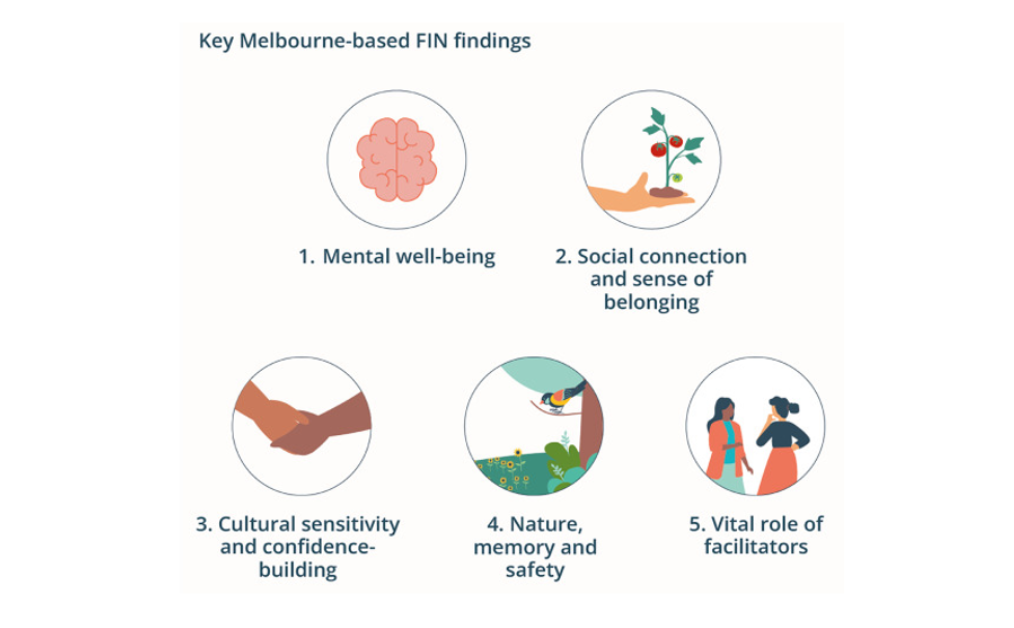
Five themes emerged from interviews, observations, photo elicitation, and group reflections:
Mental well-being. Sensory, attentive engagement with nature — noticing textures, sounds, and living things — was repeatedly described as calming and restorative. One participant called a forest therapy walk « almost like medicine. »
Social connection and belonging. Shared LGBTIQA+ refugee identity created unusually strong bonds. Participants described finding a chosen family and beginning to feel attached to Melbourne itself through repeated visits to the same natural places.
Cultural sensitivity and confidence. Shared meals — a different dish from a different country each week — sparked genuine intercultural exchange. Participants reported growing confidence in English, public transport navigation, and group participation.
Nature, memory, and safety. Natural settings functioned as judgment-free zones. Participants frequently connected Melbourne landscapes to memories of homelands, creating a continuity between past and present identities that aided adaptation. « In nature, nobody judges you. It felt safe, gentle, calm… Nature didn’t ask questions. It allowed me just to be. »
The vital role of facilitators. Carefully composed groups, trauma-informed check-ins, transport coordination, and cultural responsiveness were central to what made participation possible. Facilitation was the connective tissue of the whole programme.
The study is exploratory (no control group, modest sample) but the findings are consistent across quantitative and qualitative data. They suggest that what makes nature-based social prescribing work for marginalised communities is not nature alone, but the deliberate combination of trusted relationships, cultural safety, and shared time in place.
Commentaires récents