
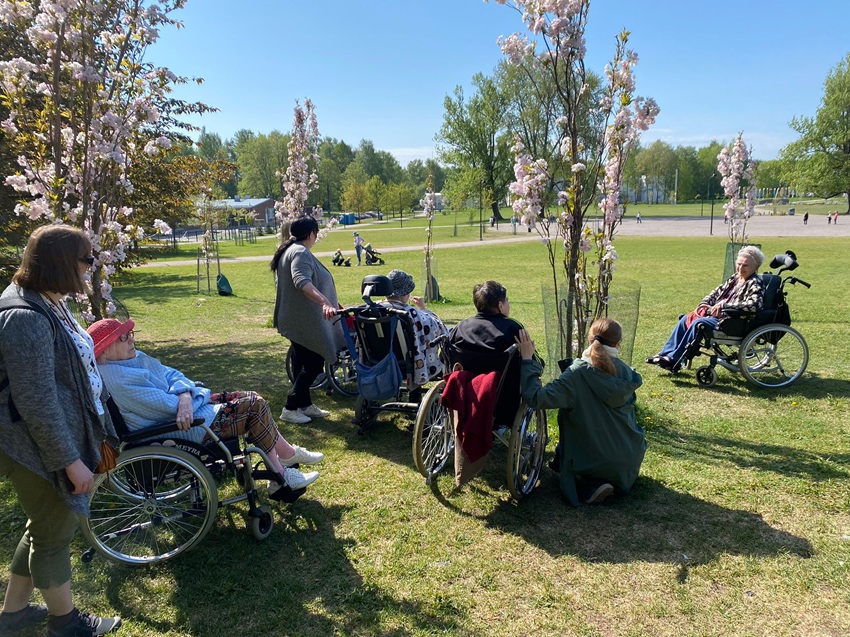
Loneliness among older adults is increasingly recognised as a significant public health challenge. As cities grow and populations age, finding practical, evidence-based ways to support wellbeing and connection is more important than ever.
A new randomised controlled trial published in Oxford Academic – Age and Ageing provides strong evidence that nature-based group activities can reduce loneliness, improve sleep quality, and enhance overall quality of life among older adults living in assisted living facilities.
Read the full open-access article: Effectiveness of nature-based group intervention in loneliness and health-related quality-of-life in lonely older adults living in assisted living facilities—a randomised controlled trial
What did the study find?
The study used a structured nature-based interventio, the Friends in Nature model, in which participants met regularly for facilitated activities in nearby green environments. Compared to a control group, people in the intervention group reported:
-
Lower levels of loneliness
-
Better sleep
-
Higher perceived quality of life
These findings add valuable rigorous empirical support to the idea that combining nature exposure with social connection can deliver meaningful wellbeing benefits for later life.
How this aligns with RECETAS
The RECETAS project explores nature-based social prescribing as a tool for enhancing social connection and reducing loneliness across diverse urban contexts. This trial reinforces several core project insights:
-
Nature matters when it is accessible, social, and community-oriented
-
Group experiences unlock connections that contribute to longer-term wellbeing
-
Rigorous evaluation, including randomised designs, strengthens the case for scaling effective interventions
Commentaires récents